Since the Iran war began, Gulf states have faced a barrage of Iranian missiles and drones, leaving their leaders with an unenviable choice: anger their closest ally and security guarantor, or risk the wrath of a powerful neighbor they must live beside long after the war ends.
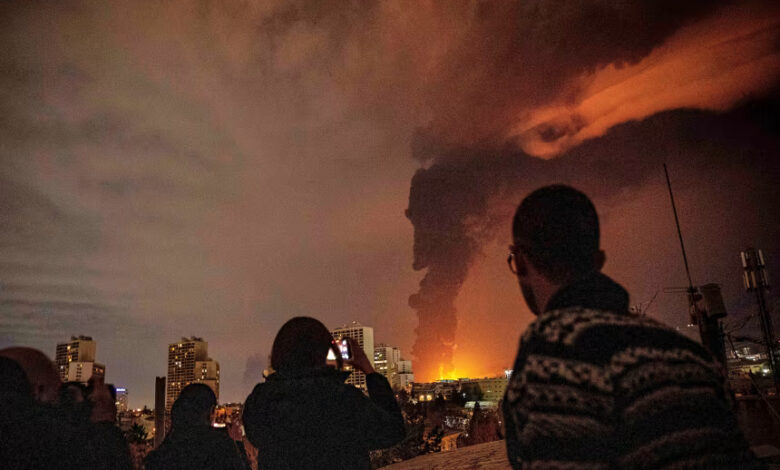
Over the weekend, Iran’s Revolutionary Guards acknowledged that about 40% of its firepower had been directed at Israel, with the majority targeting its Arab neighbors instead. More than 2,000 projectiles have been fired at Gulf states.
Both sides in the conflict appear to be using strikes on the Gulf to their advantage. Iran hopes that hitting Gulf states will drive them away from Washington, while the US and Israel appear to be using the Iranian attacks to pressure Arab governments to join the war.
Kamal Kharrazi, a key foreign policy adviser to Iran’s supreme leader, told CNN that the strikes would continue in an effort to push Gulf states to persuade US President Donald Trump to step back from the conflict.
Last week, Trump told CNN that seeing the United States’ Arab allies battered by Iran was the “biggest surprise” of the war, adding that the attacks prompted the Gulf states to “insist on being involved.”
Yet Gulf Arab nations have repeatedly said they have no desire to join the war.
Republican senator and Trump ally Lindsey Graham has been the most explicit in pressing Washington’s Arab allies to participate. After a trip to Israel, he questioned why the US should defend partners like Saudi Arabia that refuse to take part in what he described as a shared struggle against Iran. If they do not, “consequences will follow,” he warned.

Regional leaders have largely avoided responding publicly to such pressure. But Dubai billionaire and business tycoon Khalaf Al Habtoor offered a glimpse of the sentiment in the Gulf in a response to Graham’s comments.
“We know full well why we are under attack, and we also know who dragged the entire region into this dangerous escalation without consulting those he calls his ‘allies’ in the region,” he wrote on X, before deleting the post.
Gulf states are deeply wary of being drawn into a wider war, the long-term consequences of which they may ultimately have to manage alone.
There is a sense in the Gulf that by going to war with Iran, the Trump administration prioritized Israel’s security over that of its Arab allies, said Hasan Alhasan, senior fellow for Middle East policy at the International Institute for Strategic Studies.
“That distrust is likely to be a barrier to Gulf states joining an offensive action,” he said.
Why the region is reluctant to join the fight
Gulf states are acutely aware of the difficult position they’re in.
“At the end of the day, you are neighbors,” a UAE official told CNN, referring to Iran. Relations with Tehran would eventually have to normalize, even if it takes decades to rebuild the “huge trust gap,” the official said.
American forces will eventually “pack up and leave” the Middle East while Iran will remain a permanent neighbor, said Bader Al Saif, a professor of history at Kuwait University.
“They’ve left Afghanistan. They’re leaving Iraq, and they’re going to leave our region as well. So we need to take matters into our own hands,” he said.

Some smaller Gulf states may also be waiting to see how Saudi Arabia responds. The kingdom is the region’s heavyweight, and its decisions could shape whether others follow.
But entering the conflict could force Riyadh to fight on multiple fronts, including along its southern border with Yemen, where Iran-backed Houthi rebels have only recently scaled back years of attacks on Saudi territory.
Among the Gulf Arab states targeted by Iran, Saudi Arabia is the only one with a coastline on the Red Sea, giving it an export route that bypasses the Strait of Hormuz. But that route too is vulnerable to Iran’s proxies. Yemen’s Houthis have previously disrupted shipping through the Bab al-Mandab strait – the chokepoint linking the Red Sea to global shipping lanes – and could threaten it again if the conflict escalates.
Alhasan said Gulf states must weigh the risks of joining the war against the cost of staying out, warning that inaction could weaken deterrence and make future Iranian attacks more likely.
They could support US operations by opening their airspace and bases, the “least escalatory option,” he said. They could also target Iranian missile and drone launch sites or escalate further by striking infrastructure directly – “a refinery for a refinery.”
But Gulf governments would likely intervene with the goal of restoring deterrence and ending the conflict quickly, he said, while the US and Israel appear focused on destroying Iran’s military capabilities.
Attacks on infrastructure
Another concern for Gulf states is the tit-for-tat targeting of critical civilian infrastructure.
Over the weekend, a desalination plant on Iran’s Qeshm Island was hit, prompting Iran to retaliate by damaging a desalination facility in Bahrain with a drone.
The episode heightened fears across the Gulf that the war could expand to include water infrastructure in a region heavily dependent on desalination.
The desert Gulf states have less than 1% of the world’s population but account for roughly half its desalination capacity. An Iranian counterattack on water infrastructure could severely disrupt supplies in a region almost entirely dependent on desalinated water.
Citing an Israeli official, the Jerusalem Post reported Sunday that the UAE was responsible for the strike on the Iranian plant, potentially its first attack on Iran during the war.
UAE denials were swift. Officials said Abu Dhabi’s posture in the war was purely defensive and would remain so, while reiterating the country’s right to defend its sovereignty.
Anwar Gargash, adviser to the UAE president, said Abu Dhabi would “not be dragged into escalation.”
The Jerusalem Post later cited a source close to the UAE accusing Israeli officials of spreading “rumors.”
Is Iran’s strategy working?
There are signs that Iran’s strategy may be having an impact.
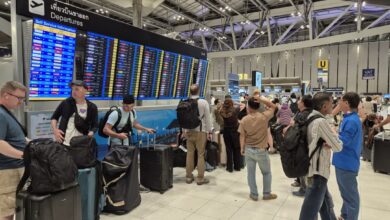
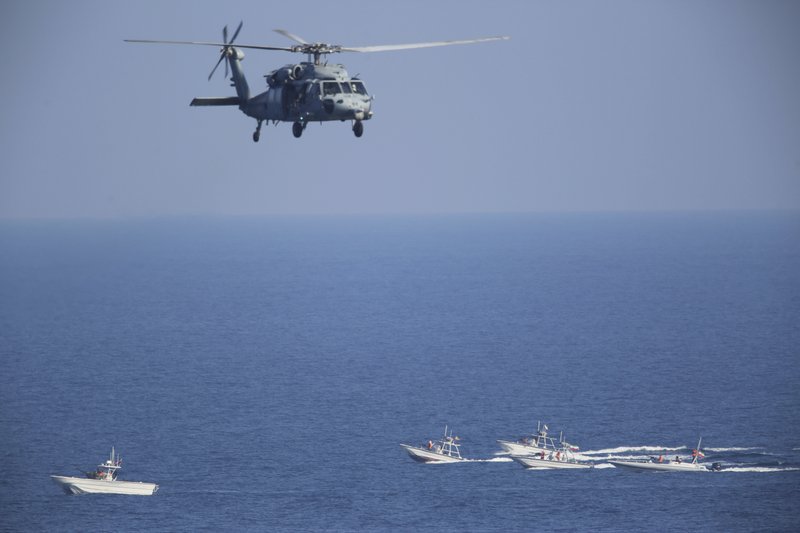
Energy shipments through the Strait of Hormuz – the narrow waterway linking the Persian Gulf to global markets – have nearly ground to a halt, effectively keeping about a fifth of the world’s oil supply under threat.
The disruption has triggered what analysts describe as the biggest oil shock in history, sending fuel prices higher in the United States.
Iran’s foreign minister sought to amplify that pressure on Monday, appealing directly to American voters.
“Blame for surging gas prices, costlier mortgages, and pummeled 401(k)’s lies squarely with Israel and its dupes in Washington,” Abbas Araghchi wrote on X.

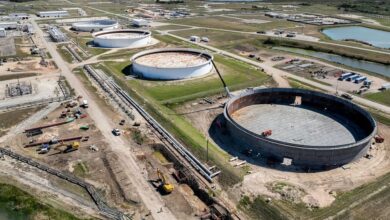
Just days after Iran began striking Gulf states, QatarEnergy – which accounts for roughly 20% of global LNG supply – halted production after attacks on its facilities, sending European gas prices soaring nearly 50%.
Qatar’s energy minister has warned that oil could climb to around $150 per barrel if the conflict continues to disrupt Gulf exports.
Meanwhile, some of Trump’s Gulf Arab allies are reviewing overseas investments as the war strains their economies, a Gulf official told CNN, just months after the president touted trillions of dollars in investment pledges from the region as a major economic victory.
Yet even as the conflict rattles global markets and Gulf economies, regional governments remain reluctant to enter a war they do not control, wary of being drawn into a confrontation whose consequences they may have to manage long after outside powers move on.
“Still, there’s a risk of inaction,” Alhasan warned. “How long can the Gulf sit back and absorb attacks? Inaction is not risk-free.”
CNN’s Becky Anderson and John Lui contributed reporting.