Dozens of countries have done the unprecedented, releasing an historic amount of crude from emergency reserves to prevent high oil prices from crippling the economy. If that doesn’t work, there’s only one serious option left: ending the war and opening the Strait of Hormuz.
Those nations this week agreed to send a record 400 million barrels of oil into the market to counteract choked-off crude supplies. It’s the equivalent of smashing the “break in case of emergency” glass for the oil market.
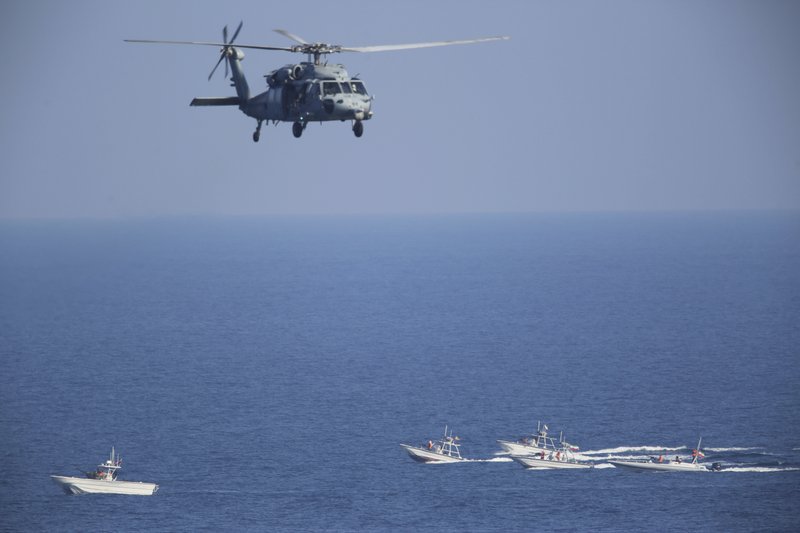
That’s because this is truly an emergency. Oil has been stuck in the Middle East for more than a week, as Iran has threatened to attack any ship passing through the strait – a critical waterway through which a fifth of the world’s crude travels.
More than 15 million barrels of crude production per day have been taken offline, according to investment firm Raymond James, and millions more barrels are stuck on tankers. It’s the biggest oil supply disruption in history – by a factor of two, according to Rapidan Energy Group.
So, the 32 member nations of the International Energy Agency turned on their storage tank spigots to flood the market.

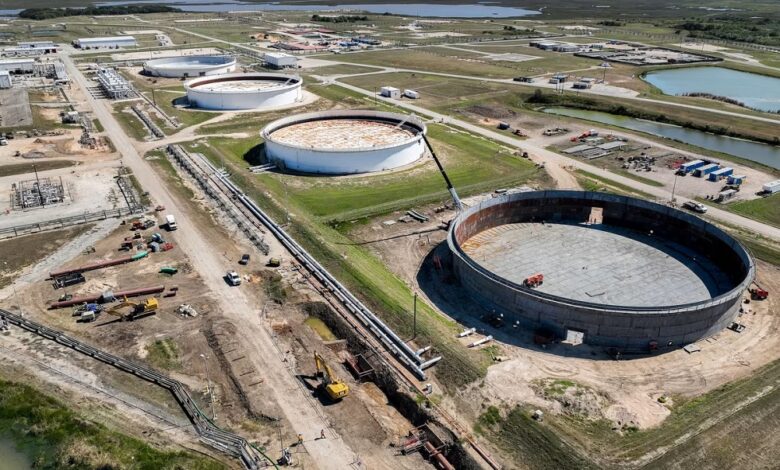
It had better work, because when the Strategic Petroleum Reserve (SPR) of emergency oil is gone, it’s gone, until new supply comes back online. The only way for that to happen is to get oil flowing through the Persian Gulf again.
And that can’t happen until President Donald Trump figures out how to end the fighting and secure safe passage for the dozens of oil tankers trying to navigate the now-treacherous channel.
Will it work?
You don’t have to look too far back to determine what this could mean for gas prices. Just four years ago, President Joe Biden coordinated what was then the largest-ever release of emergency oil: 182 million barrels.
By the Biden administration’s own calculations, that SPR release reduced gas prices by between 17 cents and 42 cents over four months.
Another way to look at it: The SPR release meant drivers paid a record $5 for a gallon of gas, on average, over the course of days instead of weeks, according to Tom Kloza, an independent oil analyst and an advisor to Gulf Oil.
Gas prices have already risen 58 cents a gallon since the start of the war in Iran late last month, and industry analysts believe it’s on the way to four dollars by month-end if oil prices stay around their current $90 range for a prolonged period.
That’s because the SPR release is a relative drop in the bucket. Global oil consumption is around 100 million barrels per day; the new emergency oil is enough to fuel the world for about four days.

And it’s not coming all at once: “The emergency stocks will be made available to the market over a timeframe that is appropriate to the national circumstances of each member country,” the IEA said in a statement.
That’s why oil traders aren’t getting excited – at least not yet. Oil actually got more expensive Wednesday after the announcement: US oil prices rose 5% to $88 a barrel. And Brent crude, the international benchmark, was also up 5% to $92.50.
“The IEA just shot its bullet,” said Jay Hatfield, CEO and founder of asset manager Infrastructure Capital Advisors. “I’m not sure we’re going to a lot below $80 until we get real clarity, not rhetoric, about how we get ships through the strait.”
What’s next?
The IEA said it could release even more SPR oil. But it doesn’t have infinite stockpiles. The agreed-upon release represents a third of the oil currently in storage.
And restoring those reserves is tricky: The oil has to be bought over the course of time so that prices don’t jump. Trump, who criticized Biden’s decision to release oil in 2022, vowed in his presidential campaign to refill America’s SPR – an action his administration didn’t take even when oil sat below $60 a barrel for a while.
So countries won’t go to zero reserves, and many will be hesitant to go much further than the action they’ve already taken – particularly if the current release has little effect on oil and gas prices.
Largely, the SPR release is a symbolic act, designed to boost sentiment in the market when traders are nervous, noted Matt Smith, analyst at markets data firm Kpler.
But it doesn’t solve the underlying problem.
“There’s plenty of oil in the world,” said Rob Thummel, Portfolio Manager at Tortoise Capital. “The question is: Can we get it moving through the Strait of Hormuz? You need it to be operating to get oil (prices) back down to where we started the year.”
CNN’s Chris Isidore and Matt Egan contributed to this report.