China has come out swinging after Panama’s high court ruled against a Hong Kong-backed company’s right to operate key ports at the Panama Canal, vowing the government will “pay a heavy political and economic price” if it did not reverse course.
The vitriol is the latest inflection point in the saga around Chinese interests in the strategic waterway, through which some 40 percent of all US container traffic transits annually, and which has become a focal point of the Trump administration’s aim to oust rival powers from the Western hemisphere.
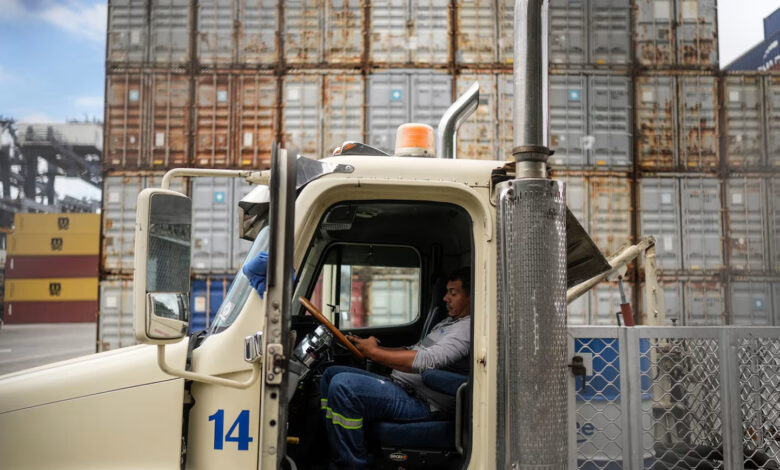
Hong Kong-based multinational CK Hutchison operates ports across the world through its Hutchison Ports business and subsidiaries. They include two key terminals on the Panama Canal – one at either end – a concession that the Central American nation’s Supreme Court deemed unconstitutionalin a ruling late last month.
The “truly shameful and pathetic” ruling “succumbs to hegemony and acts as an accomplice to evil,” Beijing’s office overseeing Hong Kong affairs said in an 800-word response to the court decision. “China firmly opposes the use of economic coercion and hegemonic bullying.”
The rebuttal, published Tuesday, is a clear sign of how intently China is focusing on the case – and the White House’s broader push to root out its influence in the region.

China has for years built deep inroads into Latin America and the Caribbean, where it now turns more than half a trillion in trade annually, and its state-owned firms and national champions are embedded in power grids, telecoms networks and mines.
Now, as US President Donald Trump’s administration vows to “deny non-Hemispheric competitors” control of “strategically vital assets” in the Western Hemisphere and push out foreign companies that build infrastructure there, the Panama Canal stands as the most urgent test of how the power struggle will play out.
Beijing has said it will safeguard Chinese enterprises, and its latest statement stressed it “has sufficient means, tools, strength, and capability to maintain a fair and just international economic and trade order.”
But the moment also creates a strategic challenge for Beijing as it weighs up how strong a message it wants to send to partners that it sees as siding with the US – especially as it looks for stability in its own US relations ahead of an expected visit from Trump later this spring.
Power struggle
Trump has already kneecapped Beijing’s carefully cultivated relations with Panama, raising pressure on the country over its ties with China from his first day in office.
He used his inaugural address to stake out false claims that “China is operating the Panama Canal,” and vow that the US was “taking it back.” The same day, Panama launched an audit of Hutchison Ports’ operations of the two canal ports, while President Jose Raul Mulino denied Trump’s assertions.
The company is not one of China’s many state-owned enterprises active overseas, but a major global port operator in a conglomerate controlled by Hong Kong’s richest man, Li Ka-Shing. It has defended its operations, and Beijing has dismissed claims of its interference in the canal.
But as the White House ramped up pressure on Panama, its government announced it would back out of Chinese leader Xi Jinping’s Belt and Road global infrastructure drive – a blow to Beijing’s ambitions in the region, especially as Panama was the first Latin American country to sign on to the initiative, in 2017.
The spat has only grown since.
CK Hutchison announced last spring it would sell its interests in more than 40 ports in some two dozen countries, including the two near the Panama Canal, to a group led by US firm BlackRock – a deal praised by Trump as a win for the US.

But Beijing said it must “conduct reviews and supervise” any asset sale by the company – and the deal has appeared to stall since then. It’s unclear how it will be impacted by the latest court ruling.
That ruling, which found that the contract awarded to Hutchison’s Panama Ports Company violated Panama’s constitution and follows the official audit, again raises frictions.
Hutchison Ports’ Panama Ports Company on Tuesday said it has launched arbitration against Panama, framing the ruling as part of a state “campaign” against it.
What’s next?
Beijing is well known for turning to a playbook of economic countermeasures to exert pressure. Japan’s tourism industry in recent months has been grappling with canceled flight routes and travel warnings from China due to a political spat over Taiwan. And businesses from Australian wine makers to Norwegian salmon farmers have been frozen out of the massive China market in recent years when their governments fell foul of Beijing.
China has economic leverage over Panama, too. It surpassed the US as Panama’s largest trade partner in 2019, according to United Nations data through 2024.
In its Tuesday statement, Beijing turned up the heat, saying the country would “suffer the consequences” of the ruling, which would “cause profound damage” to Panama’s business environment and economic development.
Analysts say Beijing may be weighing trade, investment and other measures to respond – and dissuade other countries in the region from taking similar steps.
But there are reasons for Beijing to proceed carefully. For one, even as it feels the squeeze from the US’ strong-arm policy in Latin America, it also sees an opportunity.
Beijing has already cast that US posture – seen most acutely in the US capture of Venezuelan leader Nicolás Maduro – as a form of imperialism and bullying. And its policy thinkers calculate that while the US strategy might put more pressure on Chinese engagement in the region in the immediate term, over time it will drive more Latin American countries to choose to work with China.
Retaliating with major economic measures against Panama would have the potential to undermine Xi’s broader effort to position China as an alternative leader to the US, especially for emerging economies Beijing says are not served by a US-led world.
Beijing may also not want to rock the boat too much ahead of the expected visit by Trump.

But Beijing – and Chinese firms – will also be taking notes as the case continues to play out.
“If anything we should expect Chinese state-owned enterprises to be increasingly wary of committing to significant strategic investments in the vicinity of the US – given that Trump seems very keen to assert his control over geographical chokepoints and locations of significance in the region,” said Brian Wong, a geopolitics analyst at the University of Hong Kong.
And the US will be taking strategy notes too, analysts in Washington say.
There, the court ruling may be read as “proof positive that sustained pressure pays off,” said Craig Singleton, a senior fellow at the Foundation for Defense of Democracies think tank.
“Decisions like Panama’s are likely to reinforce Trump’s view that Chinese influence in the hemisphere is reversible, encouraging further challenges in places where legal, political, or regulatory pressure can be brought to bear.”
CNN’s Stephanie Yang contributed to this report.