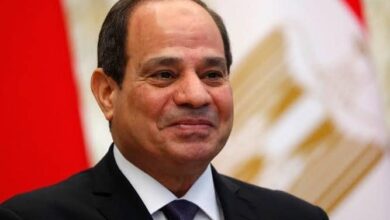
DAVOS, Switzerland, Jan 21 (MENA) – Egyptian President Abdel Fattah al-Sisi said on Wednesday that Egypt is continuing to build strong regional and international partnerships aimed at mutual benefit and sustainable development, while pressing ahead with reforms to create a more attractive business climate and expand the role of the private sector as a key partner in economic growth.
Speaking during a special dialogue session on Egypt at the World Economic Forum’s annual meeting in Davos, Sisi thanked World Economic Forum President Børge Brende for the invitation, describing the forum as an important platform for addressing global challenges and advancing a more prosperous and equitable future.
Sisi said the world is facing major development challenges amid deep shifts in international cooperation, alongside the growing influence of technological innovation, digital transformation and artificial intelligence. These changes, he said, require greater international cooperation to harness opportunities for the benefit of all nations.
He warned that such efforts are being undermined by escalating geopolitical conflicts and violations of international legitimacy, which weaken global growth prospects, threaten international peace and security, and limit opportunities for collective action.
Sisi said dialogue, international cooperation, mutual respect, peaceful coexistence and adherence to international law and the United Nations Charter remain the only path to lasting peace, stability and sustainable development. He called for the peaceful settlement of disputes, avoidance of escalation, deeper economic integration, prioritization of poverty and hunger eradication, and a stronger role for national, regional and international business institutions, with the private sector playing a central role in development.
Turning to the Middle East, Sisi said the Palestinian issue remains at the core of regional stability and resolving it is essential to achieving a just and comprehensive peace. He expressed appreciation for efforts by US President Donald Trump to halt the war in Gaza and alleviate the humanitarian suffering of Palestinians.
Sisi said the Sharm El-Sheikh Peace Summit, held on Oct. 13, 2025, marked the culmination of Egyptian efforts, in coordination with partners, to secure a ceasefire, consolidate peace and launch a serious political process toward a just and comprehensive settlement of the Palestinian issue. He stressed the need to build on the summit’s outcomes by consolidating the ceasefire, ensuring unrestricted humanitarian aid to Gaza, accelerating early recovery efforts and beginning reconstruction.
He welcomed the United States’ announcement of the launch of a second phase of the ceasefire agreement, calling it a pivotal step toward de-escalation and regional stability. Sisi reaffirmed Egypt’s commitment to working with all parties to reach a lasting solution based on the two-state framework, international legitimacy resolutions and the establishment of an independent Palestinian state along the June 4, 1967 borders with East Jerusalem as its capital.
On the economy, Sisi said Egypt has continued implementing an ambitious economic reform program despite regional and global crises, focusing on fiscal and monetary discipline, restoring investor confidence, improving the investment framework and offering incentives to investors.
He said the government has capped public investment and launched a plan to expand private sector participation in economic activity, resulting in improved growth indicators, higher private investment inflows and positive assessments from international financial institutions, including the International Monetary Fund. Global credit rating agencies, he added, have also upgraded Egypt’s credit ratings.
Sisi said Egypt will continue implementing its state ownership policy document, advancing its privatization program and reducing the state’s economic footprint to further empower the private sector. He highlighted investment opportunities across energy, automotive manufacturing including electric vehicles, pharmaceuticals, logistics, telecommunications, information technology and artificial intelligence applications.
He invited investors to capitalize on Egypt’s modern infrastructure, including roads, transport, logistics, free zones and the Suez Canal Economic Zone, and said investment in Egypt also offers access to wider African and Arab markets through free trade agreements.
In closing, Sisi reaffirmed Egypt’s commitment to regional and international stability and economic development, welcoming plans to hold a dedicated business session on Egypt later this year under his patronage.