Prime Minister Mostafa Madbouly said the total funding allocated to completed projects under the presidential “Hayah Karima” (Decent Life) initiative nationwide has exceeded LE 450 billion.
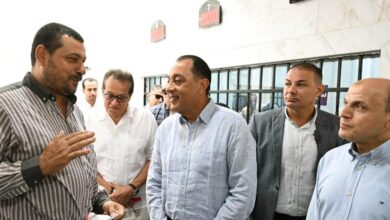
Speaking at a press conference following the opening and inspection of a number of service and development projects in Gharbiya Governorate, Madbouly said the completed projects have been implemented in more than 1,450 villages, benefiting around 20 million citizens.
Madbouly said the progress achieved under the presidential “Hayah Karima” initiative represents the outcome of extensive efforts, describing the initiative as, “by all measures, Egypt’s project of the 21st century.”
He explained that Gharbiya Governorate is currently putting the final touches on the completion of all “Hayah Karima” projects, noting that the projects have either already been received or are at the stage of preliminary handover, paving the way for their full operation.
Madbouly said Gharbiya is among the governorates where implementation of the initiative has been fully completed, adding that the completion of Phase One in the remaining governorates will take place successively, with its completion expected to be announced over the coming weeks.
He underscored the substantial scale of funding spent on the completed “Hayah Karima” projects nationwide.
Madbouly said the projects being implemented in Egyptian villages go beyond developing individual villages, forming part of a comprehensive effort to improve services and infrastructure on a large scale.
He explained that comparing the conditions of villages before the implementation of the initiative’s projects with their current status clearly demonstrates the extent of development achieved.
As an example of the scale of development, he noted that the rate of wastewater coverage in villages across Gharbiya Governorate stood at 26 percent in 2014, while it has now risen to 77 percent following the completion of the initiative’s first phase, in addition to other projects to be added to the villages targeted under the second and third phases.
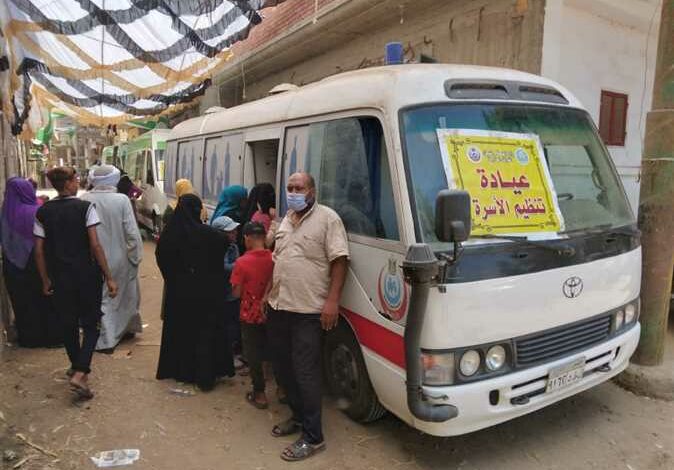
The Prime Minister pointed out that development efforts have not been limited to infrastructure projects, but have also been carried out in parallel to improve the level of services provided to citizens, particularly healthcare services through health units, medical centers and hospitals, alongside the provision of medicines and medical services.
He explained that the water treatment plants constructed under the initiative now cover projected needs through 2050.
The Prime Minister added that development efforts have also extended to bringing modern services to villages, including natural gas networks and fiber-optic telecommunications lines, stressing that the ongoing projects represent genuine development of Egyptian villages.
Madbouly explained that implementing this massive project faced numerous challenges, particularly the lack of comprehensive information at the outset regarding the services already available in villages, the complexity of implementing the projects, and challenges related to allocating land needed for their construction.
He pointed out that overcoming these challenges required tremendous efforts involving millions of Egyptians, including consulting firms, universities and construction companies, stressing that the scale of the work carried out reflects the magnitude of the project and the extensive efforts it has required over the past years.
Prime Minister Mostafa Madbouly said the government is contributing to improving the quality of life for more than 60 million citizens through the three phases of the major “Decent Life” (Haya Karima) initiative.
He said the government had gained considerable experience following the completion of the first phase of the initiative, adding that the new phase is currently focused as a top priority on sanitation projects and improving water quality, as well as healthcare projects, including hospitals and health and medical units, in addition to schools.
Madbouly said the initiative had also created significant employment opportunities, noting that the unemployment rate had fallen below 6 percent. “We are moving in the right direction despite all the unprecedented challenges we are facing,” he said.
The prime minister also highlighted the “Ras El Hekma” medical project in Matrouh, which has been fully developed, as well as expansion plans across the governorate. He pointed to the construction of an entirely new building for Alamein Hospital and the “Alam El Roum” Hospital, the governorate’s main hospital, which has hundreds of beds.
He added that major medical services are being implemented alongside housing and development projects, as well as the Alam El Roum project being developed through an Egyptian-Qatari partnership.
Madbouly stressed that tourism is a genuine source of income for Egypt, saying it is encouraging to see the large presence of foreign tourists on the North Coast. This, he noted, means an inflow of foreign currency into the country, as well as job opportunities for young people living in these areas throughout the year.
He noted that the North Coast has strong tourism potential, pointing to the acceleration in the development of tourism projects. Such projects, he said, will create job opportunities and generate billions of dollars in revenues for the state.
The prime minister also touched on the high-speed railway serving the development process, saying it would help citizens travel from Cairo to Matrouh, as well as along the “Ain Sokhna-Matrouh-Salloum” route, alongside electricity, energy and development projects.
He stressed that the government is safeguarding the state’s rights and that an integrated vision for the development of the North Coast will benefit the people of Matrouh by generating jobs and development opportunities.
Madbouly affirmed that development is at the heart of every part of Egypt, urging people to consider the scale of development achieved over the past 12 years, compared with the situation in Egypt before that period and the country’s current position, despite the unprecedented external challenges.
He added that the government is focusing on improving citizens’ quality of life and has comprehensive plans to address existing challenges. The government is nearing completion of a program aimed at launching an economic transformation over the next three years.
“Our goal is to anticipate all possible scenarios that could unfold globally and their impact on us, including the continuation of the conflicts currently taking place,” he said.
On the energy sector, Madbouly said the government reviews the file on a weekly basis with the officials responsible for it.
He added that, under the visions and strategies set by the political leadership for the sector since 2014, the state has undertaken a large number of projects whose benefits are now being realized and whose returns are being reaped during the current phase.
He affirmed that Egypt is capable of meeting the energy sector’s needs over the coming period.