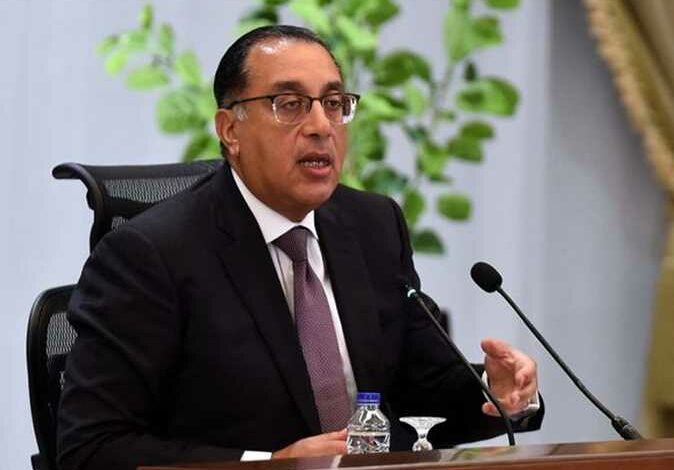
Prime Minister Mostafa Madbouly asserted his keennness on monitoring the progress of service and development projects in all governorates, particularly in Upper Egypt, aiming to improve the level of services provided to citizens and create a favorable environment for generating new job opportunities.
He said that Qena governorate enjoys a unique strategic location at the heart of Upper Egypt and possesses promising developmental assets that qualify it to become a central hub for attracting investments in the industrial, agricultural, tourism and mining sectors.
This came during Madbouly’s meeting on Tuesday, January 20, 2026, with Minister of Local Development Manal Awad and Qena Governor Khaled Abdel Halim to follow up several files and review the implementation status of key service and development projects in the governorate.
During the meeting, Abdel Halim presented a comprehensive overview of Qena’s current developmental status, the implementation of major service and development projects across various sectors, as well as key features of the “Qena 2030” development vision and the proposed mechanisms to accelerate its implementation.
The governor highlighted Qena’s strategic advantages, including its central location in Upper Egypt, its superior connectivity to the Red Sea—which positions it as the main maritime and export gateway for southern Upper Egypt via Safaga Port—its vast desert hinterlands, the longest Nile frontage in Upper Egypt, and several new urban communities, including New Qena, West Qena and New Nag Hammadi.
Qena 2030 vision aims to transform the governorate into a competitive and diversified economy focused on mining and agro-industrial production, establishing it as a tourism hub that maximizes natural and human resources while raising citizens’ living standards, he said.
The vision seeks to make Qena a “strategic link” supporting the region by strengthening agricultural and industrial clusters for export, ensuring southern Upper Egypt’s global competitiveness, he added.
The vision rests on three main goals including achieving balanced urban development, enhancing investment attractiveness, and transitioning toward a sustainable “green governorate,” the governor added.
To achieve balanced urban development, the governorate is implementing the Greater Qena urban cluster to integrate Qena city with new urban communities, fostering cohesion between rural and urban areas and turning the governorate into a regional business hub, Abdel Halim said.
Plans include developing desert hinterland villages, integrated rural development projects, and industrial poles in Qift and Nag Hammadi, as well as development of border areas associated with the “Golden Triangle” project, he added.
On investment attractiveness, Qena is promoting opportunities through its local investment map, aligned with the national investment map, targeting investors locally and abroad, including through the “Return to Roots” initiative, he said.
Regional and international partnerships with chambers of commerce and economic regions supporting Upper Egypt are also being pursued, said Abdel Halim.
Targeted projects include hotels and resorts along the Nile Corniche, maximizing underutilized assets, promoting public-private partnerships (PPP) and attracting foreign direct investment, he said.
The presentation also included industrial and craft zone development projects with private sector participation, the “Pottery City” project in Naqada to support and empower artisans and plans to revitalize Qena’s historic downtown and upgrade the governorate’s visual identity, highlighting its unique civilizational and historical character.