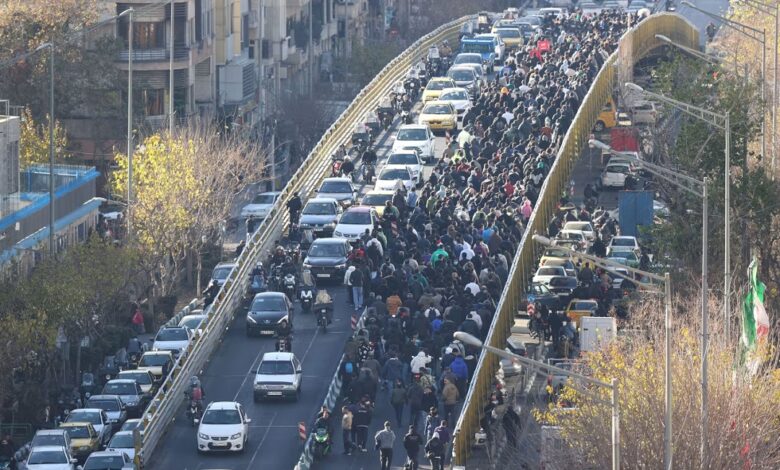
People across Iran have taken part in anti-government protests for nearly two weeks now. Dozens of people have been killed, according to the Norway-based Iran Human Rights NGO (IHRNGO).
If you’re just catching up, here are some key details about the protests that you need to know:
When did the protests begin?
Demonstrations in the country began on December 28, with people taking to the streets to protest Iran’s deteriorating economic conditions. In the days since, dissent has spread, with people across more than 100 cities participating in the demonstrations.
Why are people protesting?
The protests began when the owners of bazaars in Tehran took a stand against rampant inflation in the country. The prices of basic goods like cooking oil and chicken dramatically spiked, with some products vanishing from shelves altogether.
The country’s central bank also ended a program allowing some importers to access cheaper US dollars compared to the rest of the market – which led shopkeepers to increase prices and some to shutter their doors, initiating the demonstrations.
Having spread across Iran, these initial demonstrations have also now morphed into more general protests against the regime.
Where are these demonstrations taking place?
According to IHRNGO, people have taken to the streets in all of Iran’s 31 provinces, in at least 100 cities.
The mayor of Tehran said that protesters targeted economic infrastructure – including 26 banks – as well as two hospitals and 25 mosques in the city. CNN cannot independently verify this claim.
Who is involved?
The fact Iranian shopkeepers, known as bazaaris, were among the first protesters is significant, given that they are traditionally supportive of the Islamic Republic.
Students were also among the initial wave of protesters. In a post on X when the demonstrations began, the US State Department wrote: “First the bazaars. Then the students. Now the whole country. Iranians are united. Different lives, one demand: respect our voices and our rights,”
CNN’s Catherine Nicholls and Billy Stockwell contributed to this reporting.