In Mostafa Madbouly’s recent commentary on public debt, I could only see the Egyptian economy as a patient recently transitioned from the ICU to a regular ward—yet still dangerously tethered to life-support systems.
To disconnect the machinery now would be fatal to such a frail constitution.
This is a patient who has yet to reach convalescence, with even more daunting surgeries looming on the horizon; follow-up procedures are still required for wounds that refuse to heal. It is a ‘clinical narrative’ for an economy that remains in a state of chronic suffering—and, by all accounts, will continue to struggle.
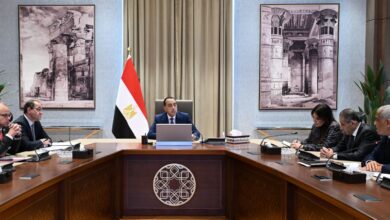
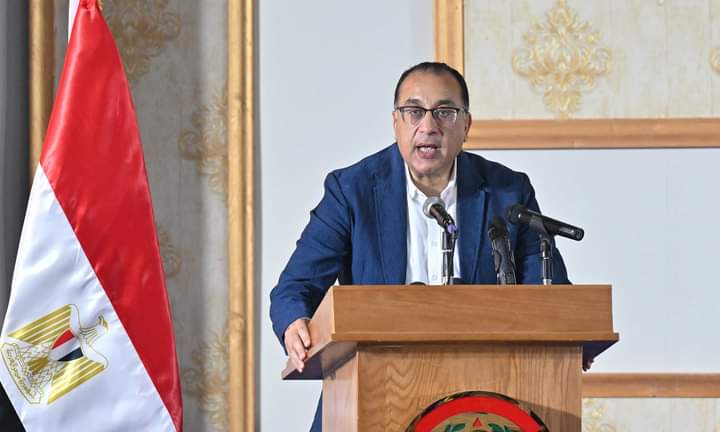
Madbouly has pivoted to a new communicative medium—the written op-ed—to signal his government’s forthcoming intentions. It is quite frankly an exercise in conditioning public opinion for measures that, in my view, will be far more draconian, especially given the staggering $32.34 billion in external debt repayments looming in 2026, according to Central Bank figures.
The Prime Minister seems to be reviving the shopworn rhetoric of “belt-tightening” in the name of what he characterizes as a “corrective course.”
However, he overlooks a grim reality: the people no longer possess the belts—nor the vital stamina—to tighten anything any further.
Without question, 2026 will be a year of reckoning. It represents the absolute peak of our debt—a summit that Madbouly insists we should not fear. In his view, the trajectory of debt should not be judged at its highest point, but rather by the descent that follows.
This is, in essence, a fresh declaration that the government will continue to borrow, likely at an even more accelerated pace. The repayment burdens are formidable, and the collective cost—for both the citizen and the state—is set to rise, even if justified as a necessary measure to maintain economic and social stability.
Yet, persisting with the same policies will not indefinitely yield the same results. The public’s patience thus far has been a conscious and deliberate choice. To ensure that this patience does not run dry, the government must lead with transparency and offer the people a genuine sense of empathy.
The Prime Minister’s article serves as a manifesto for “efficient borrowing,” wherein the government defends what it terms “debt management” and “strategic recalibration.” This approach relies on debt-for-equity swaps and the conversion of existing liabilities into long-term investments—particularly of course, those high-profile coastal development projects.
The public did not conjure the “people versus infrastructure” debate out of a vacuum, nor was it a “false dichotomy” as Madbouly suggested.
Rather, it is the inevitable byproduct of persistent, unilateral policies that have overlooked the essential hierarchy of priorities. It stems from a failure to transition from the phase of “construction” to the “cultivation” of a productive economy—one that serves the individual directly and ensures the fruits of growth are reflected in the nuances of their daily lives.
The question of hope that people cling to—and voice everywhere from local cafes to the digital arenas of social media—remains constant: “When will these spectacular infrastructure feats finally translate into a tangible productive base?”
Infrastructure, after all, must be a means to an end, not the end itself.
A nation’s true strength is also measured by its capacity for crisis prevention—contrary to the Prime Minister’s logic. This is the very essence of strategic foresight: to navigate future uncertainties and ensure that no external scenario can compromise sovereign decision-making or threaten national independence.
We need look no further than the geopolitics of energy and the weaponization of oil and gas for proof of how vulnerability can be exploited.
An insatiable appetite for borrowing has fostered a matching appetite among lenders, inviting all the attendant systemic risks. This addiction to debt has become an entrenched government doctrine. Ultimately, the takeaway from Madbouly’s piece is a sobering one: that borrowing is no longer a temporary necessity, but has become a perpetual choice.
Author’s bio:
Alaa Al-Ghadrify has been the Editor-in-Chief of the Al-Masry Al-Youm newspaper since October 2023, and the Executive Editor-in-Chief at ONA Media Group since 2016.
He is also an opinion writer in Al-Watan newspaper and Masrawy website, and an advisor at the Egypt Media Forum.
He further serves as a lecturer in television journalism and in-depth journalism for postgraduate studies at the Faculty of Mass Communication at Cairo University.
He worked as Editor-in-Chief of CBC Extra channel, which he founded, as former Managing-Editor of Al Watan newspaper, and former Executive Editor-in-Chief of its website.
He also co-founded the Al-Masry Al-Youm newspaper, the Al Watan newspaper, and the Al Ashera Masaan program on Dream TV channel, and was the Head of Program Editing at Alhurra channel.