Former negotiators who represented the US and Iran told CNN that despite the tensions, an agreement between the countries remains achievable if the Islamic Republic offers firm guarantees to suspend its nuclear program.
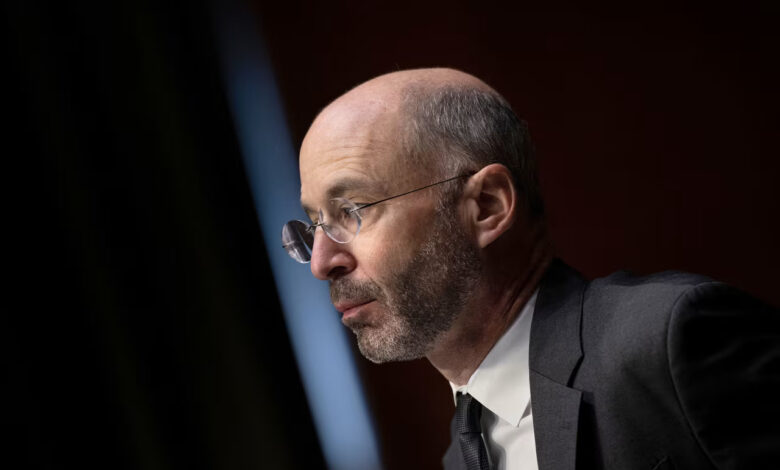
Rob Malley, a former US official who was a lead negotiator on the 2015 Iran nuclear deal, told CNN that a “short-term, fragile arrangement” is theoretically possible – one that could give both sides “a victory.”
Under the agreement with the Obama administration, Iran’s uranium enrichment and number of centrifuges were limited without completely eliminating the program.
After strikes on Iran’s nuclear facilities last year, decades of crippling economic sanctions and the deterioration of its regional proxies, Iran has weakened – giving Trump an opportunity to extract commitments from Tehran that it will indefinitely suspend enrichment or face further military action.
“Iran could make the case that its suspension was born of necessity, given the June (2025) strikes and the unsafe state of its nuclear program and claim that it needs time before being able to resume enrichment.”
“For its part, the US would maintain that it has preserved its position that Iran should never enrich on its soil. … Both sides could describe it as a victory of sorts: Iran, by pointing to the fact that it has not relinquished the right to enrich and the US by boasting that President Trump had achieved what neither Obama nor Biden could, which is a halt to Iranian enrichment.”
Seyed Hossein Mousavian, a former Iranian diplomat who served as the spokesman for Iran during its nuclear negotiations with the European Union from 2003 to 2005, told CNN that conditions now are “very different” from the past but are “more favorable” for a deal where the Islamic Republic would provide firm guarantees that it will permanently remain as a non-nuclear weapon state.
“Iran’s current negotiations are centered on survival and the preservation of its territorial integrity and national sovereignty. In this regard, Iran will under no circumstances bargain away its defensive deterrence capabilities,” Mousavian said.
Malley added, “Of course, whether President Trump is open to a nuclear-only deal, or will insist that it covers ballistic missiles, Iran’s regional partners, or even its domestic policies, is a whole other matter.”