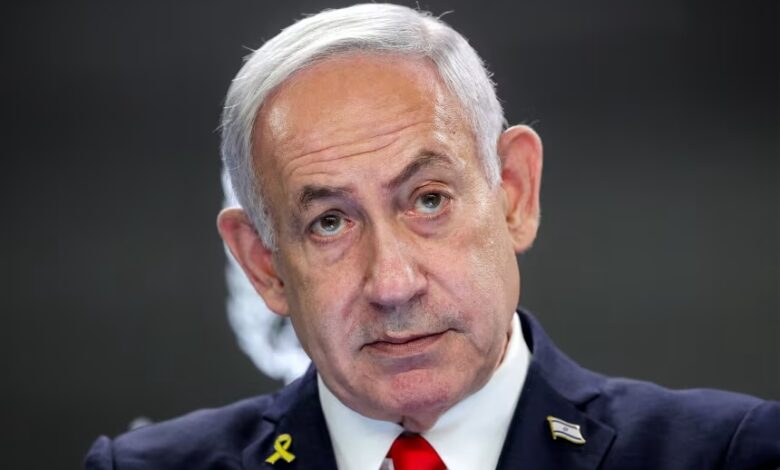
Former Egyptian Ambassador to Tel Aviv, Atef Salem, stated that mounting speculation suggests Israeli Prime Minister Benjamin Netanyahu may be sheltering in fortified underground sites in Jerusalem – possibly even beneath the Al-Aqsa Mosque compound.
These comments come amid a surge of rumors regarding an assassination attempt on the Prime Minister.
Conflicting reports about his fate circulated widely before he eventually appeared in public to dismiss the claims.
The uncertainty is exacerbated by stringent censorship and restrictions on media coverage within Israel, creating an information vacuum that allows unverified news to proliferate.
In statements to the Egyptian news outlet Sada El-Balad, the former diplomat stated that the Israeli government has a history of convening in fortified bunkers during periods of heightened tension.
He pointed out that in 2023, Netanyahu held a cabinet meeting in a secure underground facility, illustrating the leadership’s reliance on such installations during exceptional security crises.
Salem emphasized that rumors can often serve as a psychological weapon during wartime but typically only gain traction when information is clouded by ambiguity. He explained that it is common for leaders to limit their public appearances for security reasons.
He added that some assessments suggest Netanyahu could be utilizing a fortified room or bunker beneath the Al-Aqsa Mosque as part of the extreme measures taken by Israeli leadership to ensure their safety during escalations.
Salem observed that the current conflict between Iran and Israel is a prime example of this dynamic. The lack of transparency surrounding events has opened the door for contradictory narratives.
He highlighted that Israel is rigorously controlling the publication of images and videos from within its borders, threatening heavy fines and penalties for anyone documenting scenes that could reveal the reality on the ground.
These restrictions—combined with limited access for field journalists—make it difficult to verify reports of damage and destruction in several Israeli cities.
Salem noted that this strategy is not unique to Israel.
He remarked that Iran manages its media landscape similarly, with a lack of clear information regarding internal developments. This mutual opacity fuels conflicting accounts regarding the fate of leaders and the true extent of casualties on both sides.
The former ambassador explained that the stature of a public figure or the magnitude of an event plays a decisive role in how rumors proliferate. The more influential a figure is on the global stage, the more traction any news concerning them gains, regardless of its accuracy.
He cited the recurring rumors surrounding the fate or whereabouts of Netanyahu as a prime example, noting how such reports spread rapidly due to his significant political weight.
Salem further explained that certain rumors are often calculated components of psychological warfare. For instance, a high-profile figure might intentionally withdraw from the public eye for a brief period, deliberately inviting speculation and varied interpretations.
Similarly, narratives circulated by warring parties often serve as strategic attempts to sway public opinion or convey specific political and security messages.
Salem said that the primary objective of such rumors is frequently to undermine the morale of civilian populations or military forces, or to sow confusion within the opposing camp.
He pointed to recent reports suggesting that Israel’s interceptor missile stockpiles were depleted—a narrative promoted by Iranian sources to unsettle the Israeli public, which Israel promptly denied while reaffirming its defensive capabilities.
He observed that this brand of media warfare is not a modern phenomenon but a well-established tool of conflict management, particularly in the Middle East, where rumors and propaganda function as parallel instruments to military force.
Salem added that Israel maintains specialized units dedicated to information operations and psychological warfare, tasked with generating disinformation or amplifying specific facts to serve strategic military and political goals.
Historically, he noted, there have been numerous instances where disinformation was leveraged during crises to justify military actions or manipulate public sentiment.
Where is Netanyahu?
Regarding the speculation over Prime Minister Netanyahu’s fate, Salem clarified that these reports remain purely speculative, given the absence of any official confirmation regarding his status or location.
He added that it is entirely common for leaders to limit their media presence or vanish from public view during wartime for strictly security-related reasons.