America’s attitude toward allies leading up to the Iran war was the geopolitical equivalent of a slogan on a jacket once notoriously sported by first lady Melania Trump: “I Really Don’t Care. Do U?”
The Trump administration not only spurned coalitions and failed to seek the diplomatic legitimacy that marked the 1990-91 Gulf War or even the Iraq invasion in 2003; it launched its onslaught, along with Israel, without even telling many of its friends.
Take, for instance, the blindsiding during a trip to Dubai of a senior member of Italy’s government, which is closer to Trump’s ideology than most in Europe. “Think about the fundamental lack of coordination that represents: One of the US’ closest allies’ defense minister was in the theater when it kicked off, and had no idea,” said a US official.
Nine days later, the war has pulled the world more deeply than ever into the disorienting vortex that has already defined American life in the whiplash era of Donald Trump’s tear-it-down politics.
The US’ and Israel’s opening strikes — which killed Iran’s supreme leader, Ayatollah Ali Khamenei — sent off a regional pandemonium. European and Middle Eastern governments were confronted with a sudden war that wasn’t theirs and that most didn’t want. Officials scrambled to rescue citizens trapped in a widening combat zone. Soaring energy prices battered fragile economies and uproar rocked domestic politics. In the Gulf, US allies faced a drone and missile barrage that shattered the opulent calm of gleaming glass cities springing from the desert and shut down a global aviation crossroads.

Now, some allies are growing frustrated amid rising economic costs, fears of a migrant crisis if Iran implodes, and their citizens’ vulnerability. And they worry about what might come next.
But despite the administration’s triumphalism and the determination of his critics to compare America’s newest war to the Iraq quagmire, it’s too early to fairly judge how the war might end.
Relentless US and Israeli air attacks — in a military playbook that feels far more planned out than the political one — stand a strong chance of neutering Tehran’s power to threaten its neighbors. This would benefit the wider Middle East, bill Trump as a regional strongman, deliver Israel from an existential threat, and improve US national security after a near 50-year feud with the Islamic Republic.
But without full regime change, Iranians might still pay a heavy price if crackdowns rather than counter-revolution follow. And if Trump’s war shatters the Iranian state and sparks civil war, a refugee crisis or grave economic consequence could destabilize the world.

‘Keep calm and (don’t) humiliate them’
The war has coined new geopolitical truths for Western and Middle East nations that can’t live with Trump but can’t live without him.
It’s hard to understand why European and Gulf allies didn’t see this coming. This war is the muscular epitome of a new America First doctrine of unleashing US might to enforce a novel view of US interests. Like the US toppling of Venezuelan leader Nicholás Maduro, it reflects Trump lieutenant Stephen Miller’s statement on CNN last year that the “iron laws of the world” mean strong nations can rule by force. It’s the personification of Trump’s volcanic temperament, embrace of huge risks, allergy to strategy and zeal for unchecked power. The most unpredictable president of the modern age has now made the world’s top superpower its most unsettling influence.
One European diplomat told CNN the main impulse for contributing militarily to the conflict is to “protect national interests.”
Others argued that managing Trump is also a key national interest. “For now, we are trying to keep calm and not humiliate them,” said a European diplomat, explaining that hostility could backfire.
Julien Barnes-Dacey, program director for the Middle East at the European Council on Foreign Relations, said Europeans “have been caught cold.”
“They are, globally now, responding to the daily whims of a US president who is causing immense disruption,” Barnes-Dacey said. He added, “They are caught between a rock and a hard place. … On the one hand, they want to cling on to some sense of international law, or the rules-based order, and then on the other hand, they are desperately trying to keep themselves in Trump’s good books.”

Shocked as Europeans are by Trump’s contempt for international institutions, their own military fragility means they must tread carefully with a president who is critical for their defense.
“It’s too simplistic to say that the Europeans are unequivocal champions of international law. Where most of the Europeans are coming out is, ‘We’ll condemn your methods but condone your motives,’” said Nicholas Dungan, CEO of CogitoPraxis, a strategic consultancy based in The Hague.
“So as Israel and the United States pursue the war they started, the Europeans try to engage without engaging and commit without committing,” Dungan said.
But Trump, emboldened by his command of fearsome US military power, seems oblivious to European efforts to catch up. “I couldn’t care less,” he told CBS on Saturday when asked whether he wanted more help. “They can do whatever they want.”
The Iran war shock waves pummeled a transatlantic alliance already reeling from Trump’s renewed demands in January that Greenland join the United States.
The “special relationship” is in crisis after Trump reacted angrily to Britain’s initial refusal to let US pilots fly combat sorties from its bases. Beleaguered Prime Minister Keir Starmer condemned “regime change from the skies” and spoke for a nation traumatized by the Iraq War and deeply offended by Trump’s recent slighting of Allied casualties of the post-9/11 wars.
Other European states performed a more effective balancing act. French President Emmanuel Macron could not “approve” of strikes “outside of international law.” But he caught Trump’s eye by sending France’s aircraft carrier to protect French interests.
German Chancellor Friedrich Merz navigated a tricky Oval Office visit by voicing shared concerns about Iran’s nuclear and missile programs and condemning its threats against Israel. But Spanish Prime Minister Pedro Sánchez risked vital trade ties by forbidding the use of US military facilities for strikes on Iran and accusing the US of playing “Russian roulette with the destiny of millions.”

The White House was surprised by attacks on Gulf states
While Europe raced to address diplomatic and economic blowback, the situation in the Gulf was more kinetic.
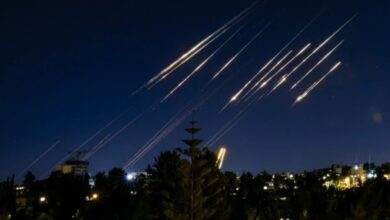
Iranian missile and drone barrages created a jarring spectacle in Kuwait, Saudi Arabia, Oman, the United Arab Emirates, Qatar and Bahrain, some of which have become wealthy havens for European and American ex-pats. The cutoff of liquified national gas production in Qatar and the effective closure of the Strait of Hormuz — a vital oil transit point — are spiking economic mayhem.
Yet incredibly, the Trump administration seemed surprised by Iran’s reprisals, a testament to the superficiality of the White House’s planning for the war, and perhaps an ill omen for what lies ahead.
An Israeli military official said the prewar assumption was that there was a “high likelihood that US bases in the region would be targeted” once conflict broke out. But the official acknowledged that Israel and the US did not fully anticipate the extent to which Iran would strike civilian targets in Gulf states. “Unfortunately, that has become part of their strategy,” the official told reporters.
Paul Musgrave, a Qatar-based professor of government at Georgetown University, agreed that Trump’s team underestimated the Iranian response. The administration’s “surprise” that this operation wasn’t as swift as the ouster of Maduro in Venezuela “all seemed to point to me that they really thought that the Iranians were bluffing,” he said.
“The Iranians have disrupted life here. They haven’t leveled Doha or Dubai, but they have very much made good on promises that they made loud and clear repeatedly before hostilities broke out.”

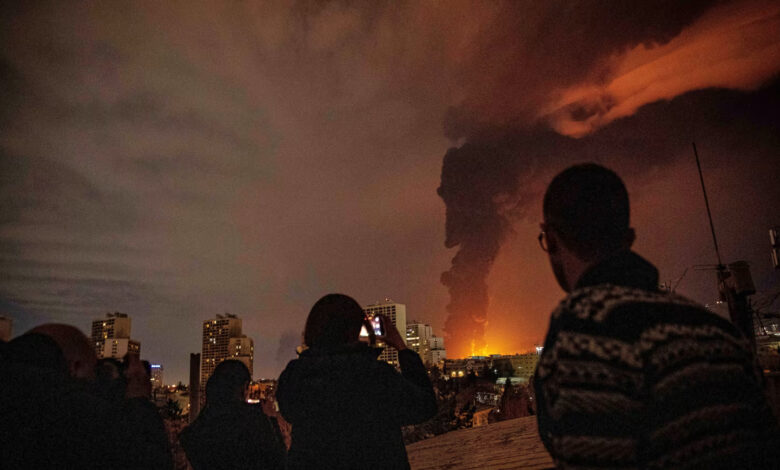
While the intensity of Iranian drone and missile strikes on Gulf states has slowed, the Islamic Republic’s arsenal remains politically potent if not militarily decisive. Attacks targeted fuel storage at Kuwait International Airport on Sunday, hours after the country’s Public Institution for Social Security building was set on fire in a drone strike. In Saudi Arabia, two people were killed and 12 others injured when a military projectile slammed into a residential facility.
This helps explain growing regional concern. In a call with Trump on Saturday, Qatari Emir Sheikh Tamim bin Hamad Al-Thani stressed the “importance of containing the crisis and intensifying diplomacy to end it.” And Oman, which was mediating US-Iran talks that Trump blew up, is also worried. Foreign Minister Badr Albusaidi warned Sunday the region was at a “dangerous turning point.”
Some government and military officials in Gulf nations are beginning to chafe at the administration’s bombastic tone, three sources familiar with the matter said. “The messaging coming out of DC is almost pornographic. It is like leaders are enjoying the bloodshed, with no clear endgame. While the economies in the GCC (Gulf Cooperation Council) are being impacted,” said a former senior US official currently in the region.

What Trump’s America wants from its allies
The war’s endgame will also be a minefield for US allies.
A remodeled clerical regime in Iran — under the newly anointed Supreme Leader Mojtaba Khamenei, if he survives — may present less of an outside threat but require regular follow-up military strikes to keep it in a box. Any future government led by remnants of the Islamic Revolutionary Guard Corps may prioritize domestic repression but also threaten the region. No one wants the chaos of a societal meltdown in Iran. And everyone knows Trump might just mirror his domestic approach by declaring victory, walking away and leaving everyone else to deal with the consequences.
The Trump administration appears obsessed with European weakness. Defense Secretary Pete Hegseth, for instance, chided allies who “wring their hands and clutch their pearls” while “hemming and hawing about the use of force.”
One way for Europe to repair the breach without compromising its principles would be to help itself.
Sophia Gaston, senior research fellow at the Centre for Statecraft and National Security in the Department of War Studies at King’s College London, said the US expects three things from its alliance with Britain: strategic alignment, cultural alignment and exceptional capabilities. A demonstration of an effective defense capacity could make differences on strategy and culture excusable in Washington.
“The more a country like Britain invests in its sovereign strength, prosperity and capability, the more attractive it also then becomes for the United States as a partner, but also the more it can defend its own interests against the turbulence of such an alliance,” Gaston said.
In the Gulf, attitudes toward the US will be refracted through the war’s aftermath but also Iran’s behavior.

“I think it is fair to say that if you’re the average resident of the Gulf, you are angry to annoyed, at a minimum, with the United States, and more so with Israel,” Musgrave said. “But the people shooting at us are not America or Israel, and Iran might have a strategy that they’ve calibrated to raise the pressure on the Gulf states, to try to drag a wedge between them and the United States. But ultimately, it’s Iran that’s shooting at us.”
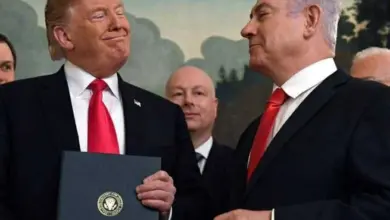
Some observers predict anger at Iran might make some Gulf states look more kindly on the normalizing relations with Israel — a Trump priority. Israeli Prime Minister Benjamin Netanyahu told Fox News last week that he believes the war will be a “gateway for peace” in Saudi Arabia.
However, two former senior Israeli officials who maintain a close relationship with the Gulf states said they are hearing “growing concern” about Israel’s latest military endeavors. “In the past two and a half years, Israel went to war and seized parts of Syria, Lebanon and Gaza and struck Qatar. And there are far-right ministers in the Israeli government who declare that they want to control territory to the Euphrates and the Tigris,” one official said, referencing rivers in Iraq. “So there are countries who are asking if they are taking down Iran just to have Israel rise as the new regional hegemony instead.”
Consequences of the Iran war are grave and ever-widening. They will leave the world changed.
Trump’s signature move is to tear down established structures before seeing where the pieces fall and finding some way to declare a win. Applied to the Middle East, this strategy is extraordinarily risky and impossible for allies to predict.
The president told The Atlantic last April that in his first term he had to “two things to do: run the country and survive.” He added: “And the second time, I run the country and the world.”
This war shows the rest of the world how tumultuous that stance will be.