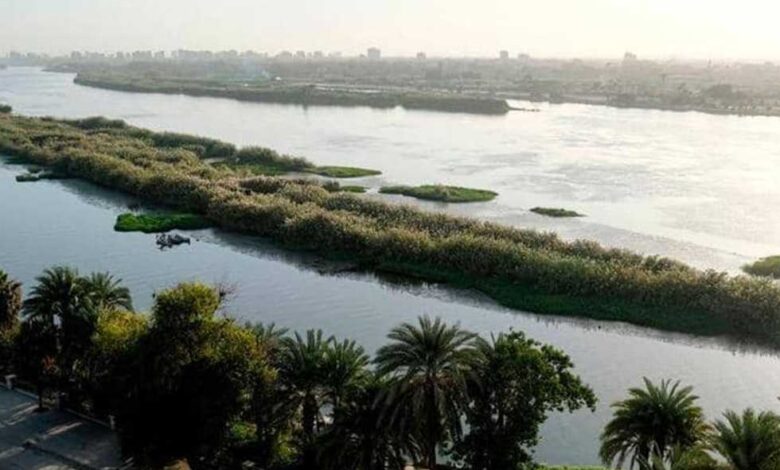
CAIRO, Feb 8 (MENA) – Minister of Foreign Affairs, Emigration and Egyptian Expatriates Badr Abdelatty called for abiding by international law on transboundary watercourses governance, including the River Nile, while rejecting unilateral measures by upstream states that limit a country’s ability to fulfill its citizens’ water rights.
He also underscored the importance of respecting the principles of prior notification and of causing no harm.
Abdelatty made the remarks during his meeting on Sunday with Pedro Arrojo-Agudo, UN Special Rapporteur on the human rights to safe drinking water and sanitation, who visits Egypt upon an invitation from the Egyptian government.
The foreign minister stressed that cooperation based on consensus and mutual respect remains the only viable path to achieving the shared interests of Nile Basin countries.
Abdelatty, who chairs the Supreme Standing Committee for Human Rights, said Egypt is keen to intensify engagement with relevant regional and international human rights mechanisms, foremost among them those of the Human Rights Council, particularly as Cairo began its membership of the council at the start of this year.
The foreign minister briefed the special rapporteur on key national efforts to promote and protect human rights, especially the fulfillment of rights related to access to clean water and sanitation for all.
He also highlighted Egypt’s severe water scarcity, noting that per capita water share has fallen to less than 490 cubic meters per year, less than half the water poverty threshold under United Nations standards.
The foreign minister reviewed the measures Egypt has taken over recent years to bridge the water gap and meet the water needs of more than 110 million Egyptians, despite the country’s limited water resources and its reliance on a single source — the River Nile, which accounts for 98 percent of the country’s water supply.
Abdelatty also outlined Egypt’s comprehensive approach to addressing these challenges, including developing legislative and institutional frameworks and increasing investment in infrastructure through national projects to expand water and sanitation networks, particularly in rural areas nationwide, most notably through the Decent Life (Haya Karima) presidential initiative.
He also pointed to the country’s efforts to recycle water multiple times, establish desalination plants, improve water services and quality, adopt modern irrigation technologies, mitigate climate risks and protect the environment.
The foreign minister further noted the Egyptian government’s strong emphasis on a rights-based approach, with the right to safe drinking water and sanitation enshrined in Egypt’s first National Human Rights Strategy.
He also highlighted strengthened partnerships with civil society, including initiatives to raise awareness about water conservation and the optimal use of Nile waters. (MENA)