The book “Strategic Balance: Features of Egyptian Foreign Policy over Ten Years”, published by the Ministry of Foreign Affairs, dedicates a major chapter to Egypt’s relations with Europe, titled “From Neighborhood to Strategic Partnership: Egypt’s Policy Towards the European Continent.”
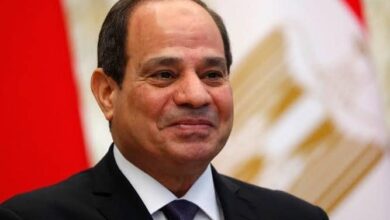
The publication emphasizes that Egypt’s foreign policy in the New Republic with respect to Europe is guided by the concept of strategic balance, as articulated by President Abdel Fattah al-Sisi, which has become the core principle of Egypt’s national interest doctrine.The book highlights that, despite prolonged crises in the Mediterranean, from Ukraine to the Arab Mashreq, and despite occasional tensions in Egypt-Europe relations following the June 30 Revolution, Egyptian foreign policy has successfully navigated these challenges by establishing strategic partnerships with the European Union, as well as bilateral relations with Italy, Russia, Germany, France, Greece, Cyprus, and other nations.
This approach exemplifies the application of the strategic balance principle, broadening Egypt’s foreign policy options and partnerships and opening opportunities for cooperation with all partners in service of Egypt’s national interest.Historically, Egypt’s relations with Europe are deeply rooted.
The book cites the prominent geographer Gamal Hamdan, who noted that although Egypt represents the furthest point on the African coast from Europe, it has historically served as a vital gateway between Europe and the East, as well as a bridge connecting Africa and Europe.While geographic proximity to Europe is an inherent fact of Egyptian history and modern geography, the evolution of this relationship from mere neighborhood ties to strategic partnerships has characterized Egypt’s foreign policy over the past decade.
The Egyptian leadership has emphasized that strategic balance necessitates the diversification of Egypt’s strategic partnerships.Relations with the European Union, the book details Egypt’s efforts over the past ten years to strengthen its relationship with the EU, moving beyond traditional frameworks, including the 2001 Egypt-EU Partnership Agreement, formally the Euro-Mediterranean Association Agreement, and the 2004 European Neighborhood Policy.
From 2013 onwards, particularly following Egypt’s constitutional process and the 2014 presidential elections, Egypt engaged intensively with European countries and EU institutions to explain the domestic situation and the major popular and political developments stemming from the June 30, 2013 Revolution. A precise understanding of these developments, and the strategic decision to restore Egypt’s regional leadership role, was essential for initiating meaningful dialogue to enhance strategic relations.In 2015, a consultative process between the EU and its partners aimed at developing a new European Neighborhood Policy was launched.
Egypt’s proactive role in shaping this policy, later emulated by other Arab countries, helped refine the framework by addressing previous conditionalities.
It also highlighted the specific circumstances of each country and mutual accountability, and ensured that commitments were respected by both sides.Within this framework, Egypt and the EU adopted the first Participation Priorities Document for 2017–2020 during the Partnership Council held in July 2017, marking a qualitative leap in bilateral relations. This was followed by a detailed Participation Priorities Document for 2021–2027, approved by the Egyptian Minister of Foreign Affairs and the EU High Representative for Foreign Affairs and Security Policy during the June 2022 Partnership Council.
A significant milestone occurred in 2024, when relations between Egypt and the EU were elevated to the level of a Comprehensive Strategic Partnership.
The Joint Declaration on the Comprehensive Strategic Partnership was signed on March 17, 2024, by President Abdel Fattah al-Sisi and President of the European Commission Ursula von der Leyen, in the presence of the prime ministers of Italy and Belgium, the President of Cyprus, and the Austrian Chancellor.
The declaration covers six main cooperation areas, including an agreement to hold a presidential-level summit every two years, alternating between Cairo and Brussels, and an economic stability support package totaling €7.4 billion.
These developments were the result of intensive diplomatic engagement and high-level visits between the two sides to discuss mechanisms for elevating the relationship and ensuring its implementation. President Sisi visited Brussels in February 2022 for the EU-Africa Summit, where he met the European Commission President and the European Council President. He also met both leaders again in New Delhi on the sidelines of the G20 Summit in September 2023.In turn, the President of the European Commission visited Egypt on November 17, 2023, where she met with President Sisi, visited El-Arish Airport to oversee European aid shipments to Gaza, and discussed bilateral relations as well as preparations for launching the Strategic Partnership Document.
The book notes that the EU remains Egypt’s largest trading partner, accounting for 25 percent of Egypt’s total foreign trade. Trade volume between Egypt and the EU increased from €23 billion in 2014 to €32.5 billion in 2024. Egyptian exports to the EU primarily include fuel, mining products, chemicals, and agricultural goods. The EU is also Egypt’s largest foreign investor, with total investments reaching €27.6 billion in 2022.