Colombia is among the most prominent countries of the Global South supporting the Palestinian cause.
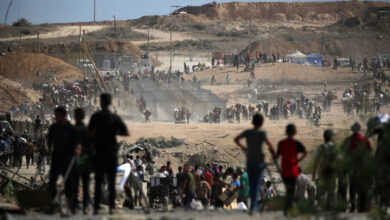
Following two years of the genocidal war on Gaza, Colombia has emerged with a revolutionary voice confronting US domination and redefining foreign policy as an ethical act rather than merely the management of interests.
Colombian President Gustavo Petro has called for the formation of an international force to protect Palestinians, while Colombia’s foreign ministry has led institutional efforts through the “The Hague Group,” up to severing diplomatic ties with Israel, placing its diplomatic weight firmly on the path of international accountability.
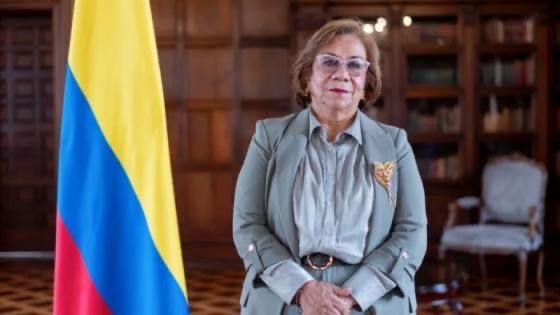
Addressing the issue directly in our exclusive interview, Colombian Foreign Minister Rosa Yolanda Villavicencio framed the conflict in Gaza not merely as a humanitarian crisis, but as a direct reflection of enduring global colonial and domination structures also manifesting in American attacks on Caribbean nations, which she slammed as “extrajudicial assassinations.”
She asserted that the violence and impunity witnessed in Gaza are part of a singular international logic, urging transcontinental solidarity among all peoples of the Global South, including Palestinians and Latin Americans, to achieve justice.
Villavicencio further called for the revival of a Non-Aligned Movement, inspired by the Bandung and Havana conferences, to center these struggles and collaboratively work toward dismantling and reforming the current unjust international system before the world descends into the “law of the jungle.”
Interview:
■ Colombia, both as a government and a people, maintains a noble stance on the Palestinian cause, and your president has called for the creation of an international army to liberate Palestine. Does the government believe this army could become a reality both politically and militarily? To what extent does support for Palestine reflect a strategic conviction that the issue is not merely a Middle Eastern matter but an extension of Colombia’s historical struggle against US influence and the legacy of the “Plan Colombia”? What examples exist in the Global South for confronting unjust and biased US policies, and could this lead to global chaos?
President Gustavo Petro’s proposal to establish a “world salvation army” for the liberation of Palestine has had significant impact in shaping the conversation and decision-making around Israel’s genocide on Gaza.
Even Trump-backed peace plans now admit that there’s a need for an international peacekeeping force to bring peace and stability to Gaza and to shield the population from further horrors.
This is the result of the heroic resistance of the Palestinian people and the acts of solidarity shown by peoples all over the world.
What President Petro achieved in his speech before the UN was to lay bare the stakes surrounding the Gaza tragedy: that if we don’t stand with the Palestinians today, the rest of humanity will be next.
Now, we have an ethical and political responsibility to oversee the faithful execution of the 20-point plan to end the Gaza conflict, which was recently endorsed by the United Nations Security Council.
Colombia was elected this year as a non-permanent member of the UNSC, starting in January 2026. In that role, we will advocate strongly in favor of Palestinian sovereignty, reconstruction, and of the welfare of all Palestinians.
■ How does the government view support for Palestine as reflecting an ethical and strategic standard for the political independence of countries in the Global South, and how do you connect this to Colombia’s history and support for Palestinians in facing occupation? Do you consider this a message to the world about the justice of the Palestinian cause, especially after President Petro’s visa was revoked?
Countries and peoples across the Global South face a common struggle: a series of superimposed colonial, capitalist, and patriarchal structures that preserve the privilege of the few at the cost of the exploitation of the majority of humankind.
Israel’s genocide in Gaza, the recent attacks by the US against civilians in the Caribbean, and even the climate crisis, among other issues, are all linked in this way.
That means that addressing these challenges cannot be effectively done piece-meal; it requires a fundamental transformation of these structures.
It is that conviction that has moved President Gustavo Petro since coming into office: that the fate of Colombia and of Colombians is intimately tied with the struggles of women the world over, of factory workers in the US, of Central American migrants, of farmers in South Asia, and, yes, of all Palestinians.
■ Does support for Palestine stem from Colombia’s historical experiences? Does the government see Israeli occupation practices as harsher than colonial experiences in Latin America and Africa, and what lessons can be transferred to the oppressed peoples in the Arab region? What message would you send to Arab leaders neighboring Israel to confront US and Israeli domination in the region, and what advice would you offer them?
For decades, the cause of the Palestinian peoples has echoed powerfully among Colombians of all walks of life. Many Colombians, including President Gustavo Petro, see themselves in the aspiration of Palestinians for a better life and in the structural challenges that they face to achieve so, including a long and continued history of (neo)colonialism—administrative, economic, and mental.
There is no single recipe for addressing these challenges. However, we know that certain practices work best. Transnational solidarity—across nationalities, classes, ethnicities, and genders—is central to this work. President Petro’s stance with Palestinians and with other oppressed peoples stems from this conviction. So is acknowledgment of the structures at play and of what is required to change them.
A simplistic “us versus them” mentality might simply reproduce the logic of violence that have led us down our current tragic path. Instead, we do best in understanding each other as products of these structures, but also as potential agents of change. This creates a much-needed space for self-reflection, solidarity, and action.
■ What is your message to Arab peoples and Palestinians in light of Israeli escalation in Lebanon, Syria, and Palestine? Do you believe that US support has enabled Israel to commit crimes in these countries? How does the government assess United Nations Security Council Resolution 2803, considered to withdraw the Palestinian right to self-determination in favor of the US administration, and has the Security Council become an instrument to advance US policies?
Colombia is mindful that a genocide is still ongoing in Gaza and that violence continues to be committed against people across the Middle East by Israel. This is not merely the result of decisions made by the Benjamin Netanyahu government; rather, it is the natural outcome of an international structure that has normalized violence and that allows the powerful few to get away with it.
Few would argue that the UN system is without flaws. In fact, it closely reflects and reinforces power dynamics.
Nonetheless, the UN system also belongs to us, to the peoples of the Global South. Countries like Colombia were intimately involved in its conception and creation. Nowadays, we are also responsible for making it more just, representative, and effective.
That means acting from within the restraints of the UN system to bring about the changes that we want to see in it, including full membership for Palestine.
Next year, Colombia will take on a seat in the United Nations Security Council as a non-permanent member. We will use this two-year period to advocate strongly in favor of a comprehensive, humane view of peace and security for all of humankind.
■ The Colombian president described Gaza as “the capital of resistance in the world.” To what extent do you agree with this description? How do you view Palestinian resistance? Has US and Israeli propaganda succeeded in distorting it, or have peoples become more aware of the cause after October 7, 2023? Has the war of extermination established a new phase in dealing with the Palestinian cause?
The tide of public opinion has already shifted on Israel’s genocide against Palestinians.
People the world over now acknowledge what the Palestinian people, President Gustavo Petro, and others said from the very beginning: that Israel is committing genocide, and not just starting from October 7, but well before that.
This has, in turn, emboldened many to take more action, as we saw with interest in the Global Sumud flotilla.
None of this would have happened were it not for the persistent and heroic resistance of the Palestinian people, who, generation after generation, have dared to speak up against injustice. We take inspiration from their actions.
■ Some fear that Gaza’s reconstruction may be used as a political tool against Palestinians. What is your comment? What role can Colombia and the countries of the Global South play in supporting reconstruction projects and humanitarian aid within their commitment to human and international values?
The Colombian government recognizes that Palestine will not be truly free until Israel ends its campaign of violence, withdraws from Palestinian territory, Palestinians run their own affairs, and Palestine is allowed to participate and thrive as a full member of the international community.
The reconstruction of Gaza is a necessary step in this path, but one that cannot be detangled from other objectives.
Reconstruction without full statehood, recognition, and peace would be precarious.
That is why Colombia and other responsible governments across the Global South have an important responsibility in overseeing and participating in the full implementation of the 20-point plan to end the Gaza conflict. We also have a role in continuing to speak out against violations, delays, and ambiguities that are contrary to the aspirations of the Palestinian people.
Put in other words, this moment calls for us to redouble our efforts in support of the Palestinian cause.
■ Do we need a new Non-Aligned Movement similar to those founded by Gamal Abdel Nasser and Nelson Mandela? Where should we start before the world becomes a jungle? What are the dangers of Israel escaping accountability for what it has done in Gaza?
President Gustavo Petro’s speech before the meeting of United Nations Alliance of Civilizations drew inspiration from that history of gatherings of peoples from the Global South that runs through the Bandung Conference, the First Summit of the Non-Aligned Movement, and the Trilateral Conference in Havana, among others.
In them, visionary leaders dared to come together to denounce the crises of their days and to draw a roadmap towards a more just and equitable future for all.
Today, the world faces challenges not unlike those of the past.
War, inequality, and power dynamics continue to haunt us. Those dangers are only heightened by the climate crisis. In the face of such daunting challenges, some might prefer to take a backseat, leaving decision-making to the great powers. That is not the path that Colombia has chosen for itself.
Instead, Colombia under President Petro has taken an active stance in these debates, working with like-minded partners and mobilizing others.
■ Following his stance on the Palestinian cause, the Colombian president has earned the respect of Arab peoples, and some have described him as a “new Nelson Mandela.” Do President Petro’s policies require Arab support, or the emergence of a new Arab figure like Gamal Abdel Nasser to lead a South-South alliance steering the world toward a fairer system? How does the government view US sanctions against UN Special Rapporteur in the Occupied Territories, Francesca Albanese, and was this punishment for her ethical and neutral stance?
Today, the world needs millions of “new Nelson Mandelas”, that is, people who dare to speak truth to power, inspire their communities, and mobilize them into action. An ample, global web of these would be profoundly transformative and needs to be nurtured.
■ Following the revocation of President Petro’s visa after participating in a demonstration supporting Palestine, does the Foreign Ministry view this escalation as linked to Colombia’s positions on the Palestinian issue after the Gaza war? How do you explain the US administration’s use of visa issues and drug trafficking accusations as political pressure against elected presidents, and is this considered a violation of national sovereignty principles?
The Colombian government has taken note of the decision by US authorities to revoke President Gustavo Petro’s visa shortly after he participated in a peaceful demonstration supporting the Palestinian people. While it is not for us to speculate about internal motivations of another government, the timing inevitably raises questions, especially given Colombia’s outspoken advocacy for Palestinian rights and for a more balanced international system.
Regardless of the reasons behind the measure, Colombia views any use of visa decisions, public accusations, or administrative tools as instruments of political pressure against democratically elected leaders as incompatible with the principles of sovereign equality among states.
Colombia experienced decades in which its internal affairs were influenced, directly and indirectly, by the geopolitical interests of powerful actors. Our society made a collective decision to move past that era.
Today, Colombia speaks and acts with an independent voice, grounded in its Constitution, its peace agenda, and its commitment to human dignity everywhere.
We believe that genuine friendship among nations is not built on silence or obedience, but on honest dialogue.
Even when we disagree with the US, as we have on issues related to Palestine, regional peace, or the use of military force, Colombia remains committed to maintaining a respectful and constructive bilateral relationship.
At the same time, we will not compromise on core principles: the right to critique injustices, the defense of international law, and the protection of our sovereignty.
■ How do you evaluate Europe’s positions regarding the US escalation against Colombia? Has Europe become merely a follower of the United States? What principles underpin Colombia’s current foreign policy, and what message did President Petro intend to convey when he declared that he “will never kneel” before US pressures?
Colombia’s foreign policy rests on four principles that guide all our decisions, including our position on Palestine and our broader engagement with the world: independence, peace, placing people at the center, and progressivism.
These principles reflect not a temporary political moment but a long-term evolution in Colombia’s role as a sovereign, responsible actor on the global stage. They embody our conviction that international relations must be conducted on the basis of equality, honesty, and respect among states, without subordinating national interests to external agendas.
From this standpoint, Colombia’s support for the Palestinian people is a natural expression of a foreign policy of peace that rejects unilateralism, arbitrary uses of force, and the normalization of violence against civilian populations. It is also the result of an independent foreign policy, one that refuses to allow diplomatic pressure, threats, or administrative measures to dictate our ethical positions.
When President Gustavo Petro declared that he would “never kneel” before external pressures, he was reaffirming this commitment: Colombia will always speak with its own voice, grounded in international law and in the dignity of all people.
Finally, Colombia’s positions reflect a foreign policy that places human beings, not geopolitical calculations, at the center of diplomacy. Defending Palestinian rights is consistent with the values that guide our domestic and international actions: solidarity, justice, the protection of life, and the belief that peace must be comprehensive and global.
These principles will continue to guide Colombia’s engagement with all partners, including powerful ones, as we work toward a more just and truly multilateral international order.
■ How does Colombia redefine the concept of “sovereignty” in facing US political impositions? If Trump returns, would Colombia consider raising the dispute before the International Court of Justice or the Security Council, or prefer to keep the crisis within bilateral diplomatic channels?
Colombia understands sovereignty as the ability of each nation to make decisions free from coercion, in accordance with international law and with the norms that govern peaceful coexistence among states. All countries, especially the great powers, have the responsibility to respect these rules.
Colombia will continue to address any divergence through the mechanisms established by international law, while keeping open the channels of diplomatic dialogue that allow for solutions grounded in legality, mutual respect, and the principles of the UN Charter.
■ How do you explain America’s insistence on conducting military operations within Colombian maritime territory without prior coordination, and do you consider it a systematic violation of sovereignty? To what extent have US accusations of drug trafficking or terrorism become a tool to re-engineer power in Latin America and weaken leftist leadership?
Since September 2025, the US government has acknowledged that it carried out 21 strikes against boats in the Caribbean Sea and the eastern Pacific Ocean.
These resulted in the deaths of at least 83 people, including Colombians.
The US government has attempted to justify these attacks alleging that it is engaged in a war against drug cartels. International experts and even US lawmakers have criticized this stance, noting that the US Congress has not declared such a war and that the targeted assassination of civilians amounts to a form of extrajudicial killing.
Colombia considers these actions incompatible with international law and with the long-standing understanding of Latin America and the Caribbean as a zone of peace, where the use of force by external powers has no place.
Our position is clear: any response to drug trafficking must respect sovereignty, due process, and human rights, and must be rooted in a comprehensive strategy that addresses both demand and supply. Colombia has fulfilled its responsibilities in law enforcement and international cooperation with transparency and rigor.
What we cannot accept are unilateral acts that bypass legal frameworks, destabilize the region, and endanger civilian lives.
■ Washington considers growing economic ties between your country and China as a strategic threat. How do you handle US pressure, and is it possible to maintain economic independence? Do you believe the rise of China and Russia provokes US anger, as it seeks global dominance?
Colombia’s foreign policy is guided by the principle of independence, understood not as distance or isolation, but as the ability to act according to our own judgment, interests, and values.
Independence means relating to all states on the basis of equality and mutual respect; cooperating without subordinating national priorities to external agendas; and making decisions free from ideological imposition or pressure. It is a policy grounded in reciprocity, dignity, and the conviction that sovereignty is strengthened, not weakened, when it is exercised with responsibility.
This independent stance is reinforced by a changing international order.
The shift toward multi-polarity has expanded the number of voices capable of shaping global outcomes, and Latin America and the Caribbean have asserted with growing clarity that they are not the backyard of any power. Our region’s aspiration to autonomy, peaceful coexistence, and non-intervention aligns with long-standing traditions in international law and reflects the political maturity of Latin American societies.
This context allows countries like Colombia to engage the world with greater confidence and to resist attempts to confine us to spheres of influence.
In this vein, Colombia seeks friendly, constructive, and mutually beneficial relations with all states, including both China and the United States. Our goal is not to choose sides, but to cultivate partnerships that contribute to national development, regional stability, and the well-being of our people, while remaining firmly rooted in our principles.