Egyptian Foreign Minister, Badr Abdelatty reiterated his country’s rejection of Ethiopia’s unilateral measures on the Eastern Nile basin, stressing that the Grand Ethiopian Renaissance Dam (GERD) is illegitimate and that negotiations are over.
In statements made on Sunday, Abdelatty said that “the GERD is a unilateral measure by Ethiopia, and it is illegal and violates international law,” noting that Egypt realizes “the negotiation track has reached a dead end.”
Abdelatty affirmed Egypt’s right to defend its water rights in accordance with international law, stressing that “water security is an existential threat.”
This echoes an October statement from Egyptian President Abdel Fattah al-Sisi, who stressed that Egypt will not stand idly by in the face of Ethiopia’s irresponsible approach over the GERD, and will take every necessary measure to protect its interests and water security.
Tensions rising
Earlier in December, Ethiopia launched a fiery attack on Egypt in a statement issued by its Ministry of Foreign Affairs, describing officials in Cairo as being “influenced by a colonial-era mentality” and “believing in their monopoly over Nile waters.”
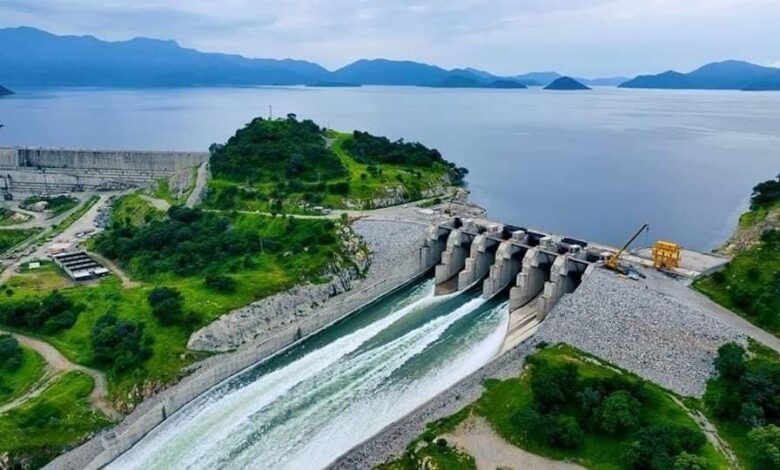
The GERD, completed and officially inaugurated on September 2025 on the Blue Nile, is one of the Nile’s main sources and the largest hydropower project in Africa.
The dam includes 13 turbines and a 74 billion cubic meter reservoir. Its reservoir has been filled five times by September 2024, reaching a level of 638 meters above sea level.
The dam has sparked sharp disputes with Egypt and Sudan, which depend on the Nile for 97 percent and 55 percent of their water, respectively.
Egypt, which historically receives 55.5 billion cubic meters annually under agreements from 1929 and 1959, fears that the dam will reduce water flow, threatening agriculture (which consumes 80 percent of the water) and the water security of its 100 million people.
Sudan sees the dam’s benefits in irrigation and electricity, but fears uncontrolled flooding, such as in October 2025 when the opening of the sluices flooded areas in the Roseires River, prompting Ethiopia to reduce discharge to 300 million cubic meters per day to avert disaster.