Palestinian sources said that, although the factions feel their patience wearing thin regarding Israel’s continued violations, there is a consensus on not returning to war in the Gaza Strip.
This is to prevent the collapse of the truce and a resumption of large-scale operations, which would exact a heavier toll on an already devastated Gaza, they added.
The sources added that the resistance is capable of responding, but it understands that Israel is trying to drag it into a renewed war to ensure the survival of Netanyahu’s government.
Therefore, it prefers to adhere to the diplomatic track and monitor mediator efforts.
They explained that Hamas informed the mediators that it does not oppose moving to the second phase, but believes the main obstacle lies with Israel, which links this transition to several conditions. These include the fate of the resistance’s weapons, who will administer the Gaza Strip, and tying the reconstruction process to a political settlement formulated in accordance with US and Israeli plans.
The sources indicated that the movement is seeking to convene a comprehensive national meeting, with the participation of Fatah and the Palestinian Authority, to reach a consensus on the pressing issues.
Qatar warns Israel
Qatar on Sunday warned against allowing Israel to obstruct the transition to the second phase under the pretext of the “two remaining bodies,” emphasizing that sustainable peace requires adherence to the terms of the agreement – not selective application of them.
The goal now is to maintain the truce long enough to reach a comprehensive political solution, it said.
Cleanup commences
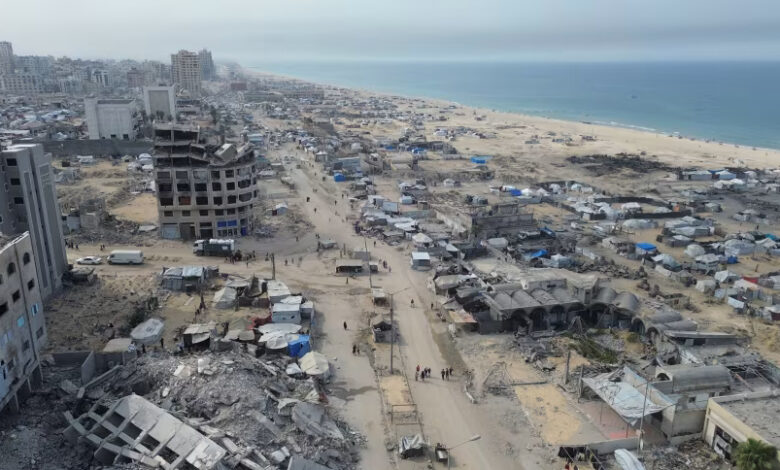
American and Israeli reports indicated that the US has already begun removing rubble from parts of Rafah under Israeli control, with the aim of initiating partial reconstruction, according to a plan that links reconstruction to the areas under Israeli control, rather than the entire Gaza Strip.
One of the most challenging periods yet
The Secretary-General of the Arab League, Ahmed Aboul-Gheit, said in his address on Sunday – marking the International Day of Solidarity with the Palestinian People – that the Palestinian cause is passing through one of its most difficult and challenging periods the steadfast Palestinian people are facing.
He assured that the Palestinian statehood project “is not dead,” and that international recognition of the State of Palestine has risen to 157 countries, including countries that played historical roles in the establishment of Israel, reflecting a clear global trend in support towards the establishment of a Palestinian state.
Edited translation from Al-Masry Al-Youm